


UW Radiology cyclotron facility renovated

The UW Department of Radiology runs a cyclotron facility that provides UW Medicine and Fred Hutch Cancer Center researchers with access to novel imaging radiopharmaceuticals. A cyclotron uses magnetic and electric fields to accelerate charged particles to very high speeds. The cyclotron is configured to utilize the accelerated particles to produce a range of desired short-lived PET radioisotopes (such as F-18 and C-11) which are then incorporated into synthesized radiotracers and subsequently used in nuclear medicine to image important biological pathways. PET imaging using these radiopharmaceuticals enables disease diagnostics, treatments and discoveries that improve our daily lives. (1)
The facility was initially developed with funding by a P01 NIH grant led by the late Principal Investigator Kenneth A. Krohn, PhD, and was continuously funded for 26 years, becoming one of the longest running P01 grants in NIH history. The facility supported, and continues to support, the development of novel PET tracers used for imaging cancer as well as neurologic diseases.
The cyclotron was purchased by grants written by Dr. Krohn and collaborators to support research and development of an increasing range of radiopharmaceuticals. Over his career, Dr. Krohn ultimately built a program with approximately 100 co-investigators looking at PET imaging for cancer treatment and evaluating response to therapies. Chemists, radiochemists, pharmacists and physicians as well as many support staff from a variety of specialties collaborated on this extremely diverse research program.
The cyclotron facility is currently overseen by UW Radiology Vice Chair of Clinical Research Dr. Delphine Chen, who is also director of radiochemistry. Research scientist/engineer Eric Shankland runs and maintains the cyclotron system. In an interview, Shankland said that he was inspired to keep the facilities running to help those with breast cancer have successful outcomes.
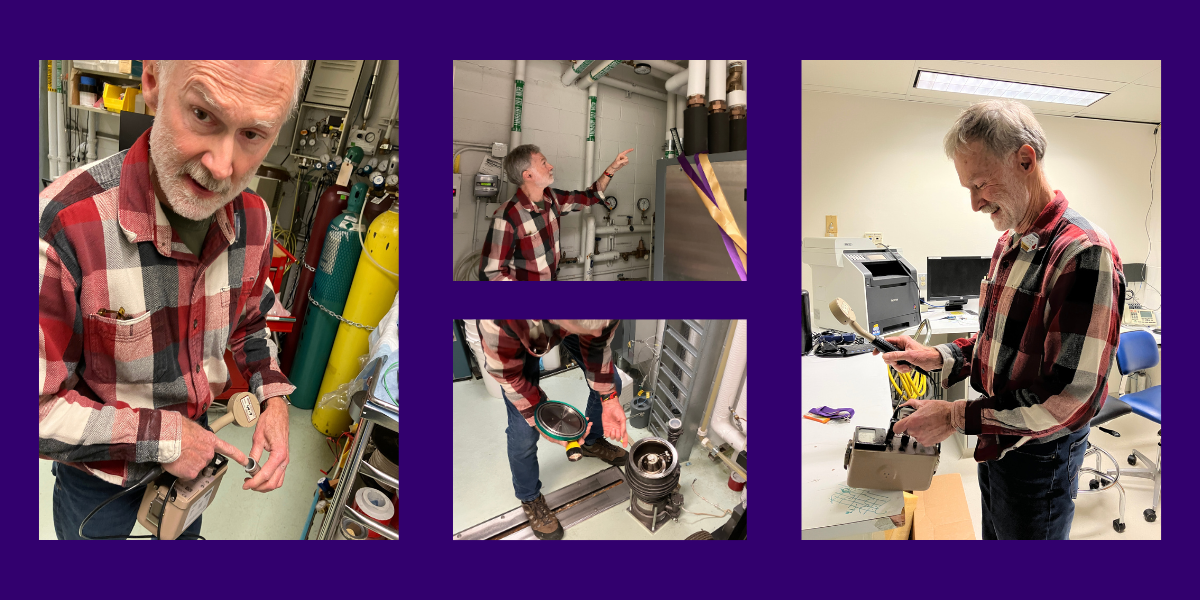
With the growth of molecular diagnostic imaging and radiotheranostics for oncologic and neurological diseases, the department recently invested over half a million dollars to upgrade critical equipment and systems. Radionuclides provided by the cyclotron and incorporated into an investigational radiotracer are the first steps in the process of imaging relevant receptor binding sites and highlighting alterations in biological pathways in cancer, heart disease and brain abnormalities.
Facility improvements are already paying off. For example, we have been able to increase capacity for production of F-18 labeled tracers for breast cancer imaging projects. We are also now expanding our portfolio of C-11 PET tracers that can be produced for imaging amyloid, a brain pathology implicated in neurodegenerative diseases, as well as other novel disease targets. Said Dr. Chen, “we’re looking forward to expanding the breadth of molecular imaging research that can be accomplished with the new facility.”
1. International Atomic Energy Agency: https://www.iaea.org/newscenter/news/what-is-a-cyclotron