




OVERVIEW
The Department of Radiology at the University of Washington offers a one-year ACGME-accredited fellowship in neuroradiology. This training program provides comprehensive experience in all aspects of neuroradiology for radiologists that have completed residency training in diagnostic radiology.
NEURORADIOLOGY FELLOWSHIP
The University of Washington Neuroradiology fellowship program participates in ERAS and the National Residency Match Program (NRMP) annually to recruit nine trainees for training. All applicants must have completed a diagnostic radiology residency and USMLE Step 3 to be eligible for consideration.
Mission Statement
Produce outstanding sub-specialty trained neuroradiologists with expertise in MR, CT, head and neck imaging, spine imaging, and neuroradiology procedures through education and experience in a collegial clinical setting.
Program Aims
- Train a diverse mix of local, national, and international applicants.
- Provide comprehensive training across multiple care sites that includes all imaging modalities and procedures in neuroradiology and meet all sub-specialty training requirements.
- Produce expert Neuroradiology practitioners.
- Prepare our trainees for a wide range of practice opportunities in the WWAMI region and beyond.
Our training program provides a well-balanced clinical, research and teaching curriculum. Applicants for this fellowship must be board eligible or certified in diagnostic radiology and must have applied for a medical license in the state of Washington prior to the start of this fellowship. First-year trainees may start the fellowship while the state medical license application is in process.
For foreign nationals, we will only be able to confirm appointments with a J1 visa status, unless there are special circumstances. For foreign nationals currently on an H1 visa, we may be able to extend the visa through our institution after receiving approval through GME (Graduate Medical Education) and the International Scholars Office (ISO). If you are a foreign national, please note that we will request that you enter the country at least two weeks prior to the start of the fellowship in order to adequately process your appointment, approve your state medical license and complete all documentation in order for you to begin the fellowship program on the approved start date.
On occasion, the second-year fellowship position (non-ACGME) is available for external candidates (depending on how many first-year fellows wish to stay for an optional second year). A second-year fellowship is optional and highly encouraged for those pursuing an academic career in neuroradiology.
In the event the program is unfilled, we will accept diagnostic neuroradiology fellowship applications outside the NRMP match, which may be emailed to Bill Freeberg, the Program Administrator at freeberg@uw.edu. The application should include:
- Copy of your curriculum vitae
- Personal statement
- Three reference letters
- One of these letters should be from a residency program director or chairman
- Copies of USMLE 1, 2 (CK) and 3 scores
- Foreign medical graduates must provide copy of the clinical skills test score result
- An ECFMG certificate copy (if applicable)
Address reference letters to the Program Director, Dr. Penelope Thomas. If you have any questions regarding the application process, contact the program administrator at freeberg@uw.edu.
Neuroradiology Eligibility and Selection Policy
Why consider a Neuroradiology fellowship at University of Washington?
- A multi-site hospital system with a wide range of pathological cases
- Flexible scheduling of angio time depending on interests of each fellow with opportunity for neuro-interventional exposure as a first-year diagnostic neuroradiology fellow
- Incredible faculty collaborating in a collegial environment
- Extensive opportunities to work with faculty with diverse research interests
- Infrastructure to mentor fellows’ research projects
- Seattle is a beautiful city with boating, hiking, and great summers
- Skiing and snowboarding at Snoqualmie Ski Resort, 45 minutes outside the city
- Extremely supportive fellowship program director and administrator
FACULTY
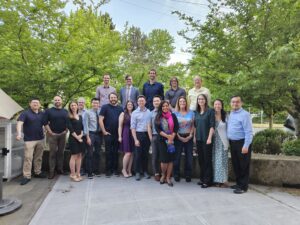
The neuroradiology section is led by Dean Shibata, MD, and consists of 15 neuroradiology faculty, nine first-year neuroradiology fellows, and one second-year fellow that functions as an attending radiologist. The faculty have differing clinical and research interests in neuroimaging and, thus, complement each other. This ensures a teaching faculty with a broad array of experience and expertise that serves to support a well-balanced educational program for the trainee.
CORE CLINICAL CURRICULUM
The neuroradiology fellowship program provides strong clinical training in the performance and interpretation of all aspects of neuroimaging including multivoxel MRS, fMRI, MR perfusion, high resolution MR neurogram, as well as CTA and CT perfusion. Fellows develop a high level of proficiency in fluoroscopic-guided lumbar punctures and myelograms, as well as CT-guided spine biopsies, and gain experience in cerebral and spinal angiography as well as spinal procedures for pain.
Exposure to a broad array of neuro-interventional techniques (under the direction of Dr. Basavaraj Ghodke) forms an integral part of the training program, including coiling of cerebral aneurysms, occlusion of AVM utilizing injectable glue, angioplasty for vasospasms, balloon occlusion of intracranial vascular abnormalities, particulate embolization of tumors, endovascular angioplasty/stenting of carotid and intracranial vessels, and thrombolytic therapy for acute stroke.
Our neuroradiology fellowship offers extensive exposure to head and neck radiology and pathology with integral collaborative work with Otolaryngology, Radiation Oncology, and Ophthalmology departments. Pediatric neuroradiology training is provided at Seattle Children’s Hospital by Dr. Jason Wright, the site director for our trainees.
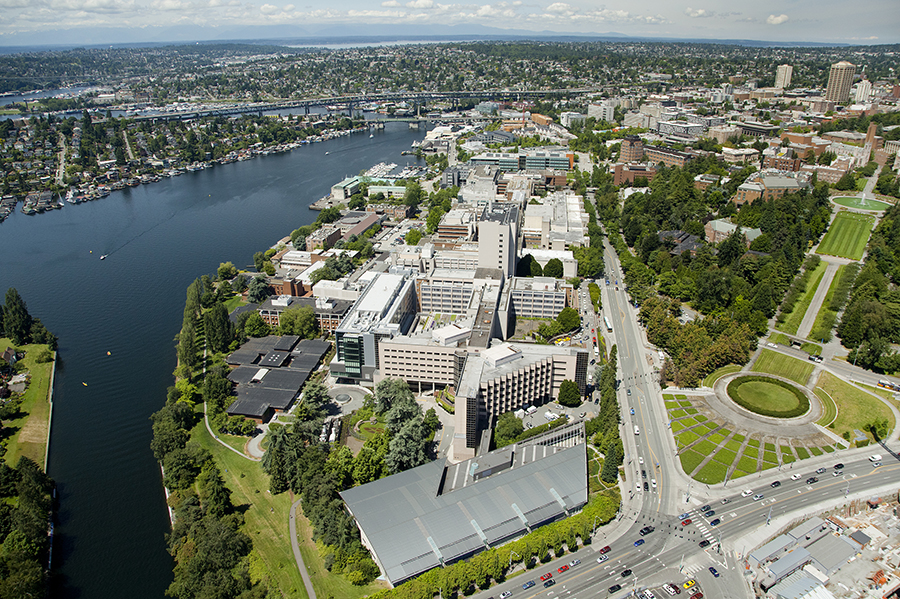
The fellowship consists of adult neuroradiology core rotations between two sites: The University of Washington Medical Center (UWMC) and Harborview Medical Center (HMC). At UWMC, trainees will also read cases from Fred Hutch Cancer Center and the UWMC Roosevelt Clinic. At HMC, trainees will also read neuro-angiography cases.
Beyond these core clinical rotations there is a four-week rotation at Seattle Children’s Hospital for pediatric neuroradiology, a one-week elective rotation (examples: learning MRI advanced post-processing, observing on a surgical service), and academic time is provided.
Call is covered by the weeknight call fellow who rotates for five days (Monday – Friday) with on-site coverage from 5:30-11:00pm and at-home coverage overnight, which primarily consists of giving preliminary reads on urgent MRI scans. Weekend call, on average, occurs once every nine weekend days and consist of on-site daytime coverage of inpatient neuroradiology studies and overnight preliminary reads on urgent MRI scans from home. Occasionally, fellows perform urgent image-guided procedures on call. The day after a 24-hour weekend or holiday call shift is scheduled as post-call with no clinical duties.
Neuroradiology Position Description and Essential Functions
EDUCATIONAL PROGRAM
In addition to education through clinical work and procedures, the neuroradiology fellowship program offers several intradepartmental and interdepartmental conferences. These include radiology departmental teaching and peer learning conferences, radiology grand rounds, neurology and neurosurgery clinical conferences, neuro-oncology tumor board, and head and neck tumor board. Neuroradiology fellows play a vital role in clinical conferences, also providing case conferences to the UW radiology residents.
Weekly neuroradiology teaching conferences by faculty are provided on Tuesday and Friday mornings teleconferenced between UWMC-Montlake and Harborview by Zoom.
Additionally, the fellows are strongly encouraged to participate in clinical research and quality improvement projects. First-year fellows will be provided academic time during which time they will be expected to develop and carry out research or a quality improvement project. This research often results in publications in peer-reviewed journals and presentations at major medical meetings. Basic science research facilities and funding are also available for fellows to pursue projects in the radiology research laboratories.
The fellowship program is registered with the American Society of Neuroradiology and is fully accredited by the Accreditation Council for Graduate Medical Education. Successful completion of the fellowship fulfills all the requirements necessary for obtaining a Certificate of Added Qualification in Neuroradiology and membership in the American Society of Neuroradiology.
FELLOWSHIP STIPEND AND BENEFITS
The stipend for the first year of fellowship (R6) will be $98,160 for fiscal year 2026-2027. The stipend for the second-year fellows is variable and commensurate with the duties and responsibilities of this position. Trainees are covered by the medical and dental insurance programs. Professional malpractice insurance coverage is also provided. There are four weeks of paid vacation time allotted. Additional professional leave is available for job interviews and educational conferences. Money for travel expenses may be provided for poster and/or oral presentations of research at a major medical meeting. Program trainees are provided with an educational stipend.
We encourage candidates to review the Prospective Residents & Fellows page with our Graduate Medical Education office when applying to the fellowship. This webpage includes the CIR NW contract, compensation schedule, RFPA, relevant polices informing eligibility and appointment, and benefits.
The University of Washington is committed to fostering an inclusive, respectful and welcoming community for all. As an equal opportunity employer, the University considers applicants for employment without regard to race, color, creed, religion, national origin, citizenship, sex, pregnancy, age, marital status, sexual orientation, gender identity or expression, genetic information, disability, or veteran status consistent with UW Executive Order No. 81.
ABR ALTERNATE PATHWAY
An alternate four-year pathway is available for international medical graduates. This pathway provides an opportunity to complete four years of radiology training and then become eligible to sit for the American Board of Radiology (ABR) board certification examinations. For more information about this opportunity click here.