




Cardiothoracic Imaging Fellowship Program
Position Identification: Fellow
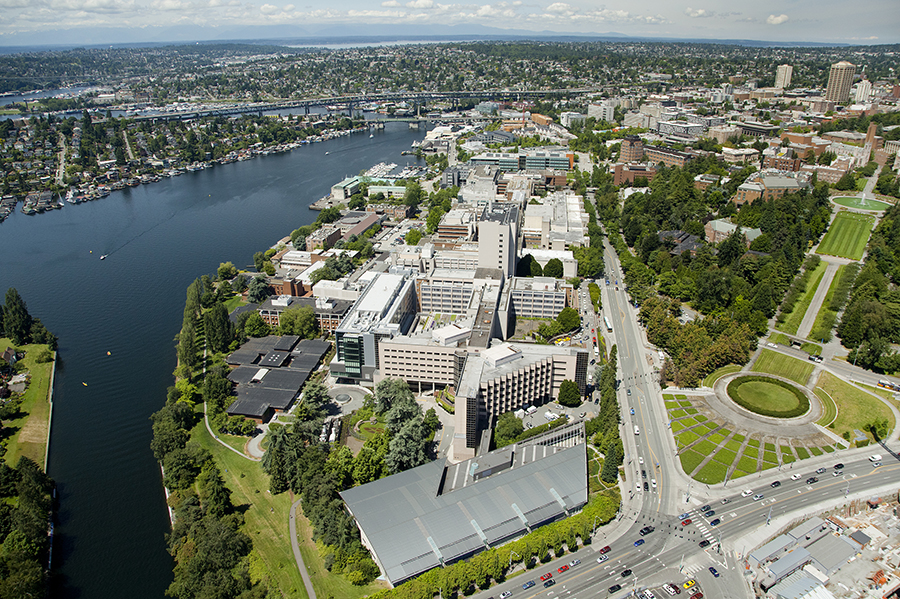
Position Summary: You will report directly to Dr. Matthew Cham, Fellowship Director, and to Dr. Hamid Chalian, Section Chief. Your primary work location will be at the University of Washington Medical Center – Montlake Campus. This is a one-year Cardiothoracic Imaging fellowship. While at the University of Washington, you will have responsibilities to the clinical service and participate in the education of junior trainees such as radiology residents. While research is not required, we expect you to generate high quality scientific or educational products (e.g. manuscripts, presentations, etc) to maintain academic time. We also expect that you will actively participate in the general activities of the Department, such as giving lectures, attending research conferences, clinical conferences, and Cardiothoracic Radiology Grand Rounds.
General Overview of the Fellow’s Role
A fellow's responsibilities include patient care responsibilities within the scope of their clinical privileges, commensurate with level of training and other responsibilities required of all members of the medical staff. Under the supervision of attendings, general responsibilities of the fellow may include:
- Reviewing, interpreting, and reporting patient imaging data in an expedient manner.
- Gathering data from the patient’s electronic medical record and using clinical judgement to guide the aforementioned image interpretation.
- Accessing scientific literature to fill gaps in knowledge.
- Using imaging software proficiently to analyze and quantify anatomic or physiologic parameters from the imaging data.
- Identifying clinically relevant imaging findings.
- Generating a concise clinical impression and treatment recommendation.
- Ordering appropriate medications when necessary.
- Protocoling imaging tests to address the exam indication(s) and to guide technologists
- Meeting, examining, treating, and communicating with patients who develop unexpected signs or symptoms during or after imaging, such as syncope or allergic reactions.
- Teaching and evaluating junior learners such as radiology residents and rotating Cardiology fellows.
UW GME Expectations for Professional Behavior
- All fellows must comply with the UW Medicine Policy on Professional Conduct and the UW Medicine Compliance Code of Conduct
- ACGME Competencies in Professionalism, including fitness for duty (See ACGME Common Program Requirements)
- All fellows must comply with GME Policieshttps://sites.uw.edu/uwgme/policies/%5bLINK, including the Resident and Fellow Position Appointment Agreement (RFPA)
Essential Functions
Essential functions are the fundamental job duties of the position that cannot be eliminated or substantially modified without changing the nature of the position.
A job function may be considered essential for the following reasons:
- The reason the position exists is to perform that function
- Trainee educational requirements and patient care responsibilities
- A limited number of available trainees can perform that function
- Varies by program, rotation, year, risk pools, etc.
- The function may be highly specialized so that the trainee in the position is hired for their expertise or ability to perform the particular function
- Cannot easily hire more trainees, especially of a specific R level
- The percentage of time spent on a function does not determine whether or not it is essential.
Essential functions for fellows must include consideration of:
- ACGME program requirements
- Specialty board requirements
- UW program requirements
- Unique to each UW training program and must consider:
- Complexity of rotations/service requirements
- Size of program
- Structure and depth of risk pools
- Please refer to the program’s Clinical Coverage Policy
- Inclusive of the hospital system requirements:
- Rotations dependent on fellows’ service for patient care
- Coverage options available
- Unique to each UW training program and must consider:
A fellow must perform the position’s essential job functions with or without an approved reasonable accommodation. Reasonable accommodation means modifying or adjusting practices, procedures, policies, job duties, or the work or application environment so that a qualified individual with a disability can still perform a position’s essential functions. Approved reasonable accommodations are determined via an interactive process involving the fellow, DSO/HR/GME and the program.
Essential functions ensure the safe and smooth delivery of education and patient care and are identified in alignment with program aims to facilitate trainee readiness for independent practice across an appropriate range of clinical settings for that specialty. Transparent documentation of a program’s essential functions is also an important resource for applicants evaluating the training program during recruitment.
Essential Program Administrative Functions
Onboarding
The Fellow must:
- Comply with all program and institutional tasks required for credentialing and onboarding by the requested deadlines. This includes but is not limited to:
- Completion of required online training modules
- Completion of TB and FIT testing by Employee Health as required by Employee Health
- Obtain a Physician Limited or a full Physician and Surgeon license to practice medicine in the state of Washington by July 1 of the program start year
- Obtain a fee-exempt DEA license
- Other onboarding tasks as required by the program
Program Tasks and Documentation
The Fellow must:
- Participate in all clinical shifts as dictated by the program schedule.
- Coordinate with co-fellows for weekday, weekend, or holiday work shift swaps. Fellows are responsible for finding coverage in the event they are unable to work their shift, whether it is for routine or emergency reasons, and communicate these changes to the Fellowship Program Director and Fellowship Program Administrator.
- Complete MedHub clinical and educational hour logs (for Fellow Non-ACGME title holders)
- Complete case or procedure logs
- Attendance at all required program meetings, including semiannual meetings, mentorship meetings, program retreats, etc.
- Attend all required program meetings and conferences and present when assigned. This includes but is not limited to:
- Cardiothoracic radiology noon conferences
- Tumor board
- HMC Pearls during Seattle Area Chest Grand Rounds
- Additional conferences as deemed necessary by the program
Essential Program Core Educational Functions
Didactics
The Fellow must:
- Comply with all standards for attendance at didactics or other core educational activities
- Adhere to the preferred mode of attendance (in-person, virtual, hybrid)
Scholarship
The Fellow must:
- Comply with all program or specialty requirements for research or scholarship, quality improvement, national or regional conference presentation, publication or scholarly writing or teaching and presentations internal to the program (e.g. journal club, didactics, case conference, etc.)
Essential Patient Care Functions
Presence and preparedness
The Fellow must:
- Present to work as physically, mentally and emotionally fit for duty
- Arrive at the patient care setting on schedule
- Arrive at work in attire appropriate for the professional and safe delivery of patient care
- Meet expectations for chart review for each patient.
- Satisfy expectations that precede sign-out and/or departure from the clinical setting, including an appropriate handoff and follow up on all patient assessments, data, or studies that will alter care in the near term.
- Notify the appropriate attending(s) and program administrator in the event of sickness.
- Arrange shift swaps with co-fellows to ensure adequate clinical coverage.
Administrative
The Fellow must:
- Complete patient health record documentation on the schedule prescribed by the program or medical center (Examples include but are not limited to radiograph, CT, and MRI reports)
- comply with expectations for EHR inbox management, including timely responses to messages from patients, medical staff and tracking and patient follow up of expected results
Patient Care Communication
The Fellow must:
- Respond in a timely manner to pages, phone calls and Epic Secure Chat.
- Remain within the program-prescribed geographic range while on call or eligible for coverage.
Patient Care Volumes
The Fellow must:
- Work toward (with supervision) or meet benchmarks for patient care volumes in all clinical settings.
- Appropriately request and utilize supervision.
- Work toward or ultimately meet procedure certification standards.
Consultation
The Fellow must:
- Appropriately respond to, triage, and staff consultations in a timely manner.
- Document findings and recommendations in a timely manner.
- Communicate with the requesting service directly (e.g. in-person, phone) to clarify ambiguous exam orders.
- Communicate with the requesting service directly after encountering acute or potentially life-threatening findings on imaging tests.
- Ensure that consultations are staffed and finalized with a faculty member in a timely manner.
Essential Shift and Schedule Functions
Settings
- Complete assigned shifts in settings deemed essential by the program
Shift length and timing
The Fellow must:
- Complete shifts of all lengths deemed essential by the program, which may include daytime, swing, nights, weekends, and holidays
- Shifts must not exceed ACGME limits of up to 28 hours per shift, and up to 80 hours per week averaged over a 4-week period
- Where appropriate, comply with designated break lengths (to meet personal needs and not impact patient care)
Call Responsibilities
The Fellow must:
- Complete assigned shifts of overnight call, as deemed essential by the program
- Complete assigned shifts of home call, as deemed essential by the program
- Remain within the prescribed geographic range while on call or eligible for coverage
- Notify the appropriate attending(s) and program administrator/coordinator immediately if unable to carry out call responsibilities
- Be assigned for on-call coverage at Northwest Hospital in the event of an IT outage, work authorization permitting.
Essential Cognitive Functions
Functions/details specific to the program:
- Assess and identify urgency of radiological cases.
- Develop and demonstrate sound clinical judgement in the diagnosis of radiological cases.
- Reflect on and apply performance feedback to support continuous improvement.
- Analyze, synthesize, and apply knowledge from clinical experience, scientific literature, and didactic learning to support clinical decision-making.
- Demonstrate reliability through consistent participation in responsibilities and timely completion of assigned tasks.
- Identify, prioritize, and manage patient care and professional responsibilities to support safe, timely, and effective outcomes.
- Apply clinical reasoning effectively in situations involving uncertainty and changing conditions.
- Seek guidance and incorporate input from others as appropriate to support patient care and professional development.
- Adapt to evolving clinical clinical environments and changing patient care needs.
- Provide guidance, support, and teaching to junior learners.
Essential Communication Functions
(including verbal and written)
Functions/details specific to the program:
- Communicate fluently in the English language, both in written language and verbally.
- Gather, interpret, and exchange information effectively with patients, families, and members of the healthcare team.
- Communicate clinical information clearly and in a patient-centered manner to support understanding and shared decision-making.
- Recognize and respond appropriately to the perspectives, needs and emotions of others.
- Collaborate effectively with members of the healthcare team across roles and settings to support coordinated, high-quality care.
- Engage respectfully with individuals from diverse social, cultural, and lived experiences.
- Contribute to a professional, inclusive, and respectful care and learning environment.
Essential physical functions
(including senses, stances and mobility, manipulation and technical skills)
Functions/details specific to the program:
- Basic computer skills
- Use of Visage, Powerscribe 360, Circle CVI42, and TeraRecon
- Visually identify and assess radiological imaging
- Perform technical aspects of patient care competently to support safe and effective diagnosis and treatment
- Sustain performance of clinical responsibilities over scheduled shifts to ensure continuity of quality patient care
Statement Of Nondiscrimination
The University of Washington prohibits discrimination, harassment and sexual misconduct in any education program or activity that it operates. Individuals may report concerns, make complaints, or direct inquiries to the Civil Rights Compliance Office. View the Statement of Nondiscrimination.
Key Principles for ADA-Compliant Language:
- Focus on results, not methods
- Essential function is a completed task, not how that task is completed
|
More Inclusive Term |
Example of Physical Demand |
|
Move/traverse |
Walk, run |
|
Ascend/descend |
Climb |
|
Transport |
Carry |
|
Relocate |
Lift |
|
Stationary position |
Sit, stand |
|
Position, detect, operate |
Feel, handle |
|
Maneuver |
Pull, push |
|
Attain |
Reach |
|
Retrieve from ground level |
Squat |
|
Repetitive movement |
Performing a task repeatedly |
|
Communicate |
Speak, talk, hear |
|
Communicate in written language |
Write |
|
Input data |
Use keyboard |
|
Position self (to move) |
Crouching, stooping, crawling |
|
Work atop |
Balance |
|
Determine, identify, assess, recognize |
See |
|
Assess |
Hear |
|
Review |
Read |
|
Adhere |
Remember |
|
Apply |
Think |
This document reflects requirements, established practices, policies, procedures, and resources as of the date of publication; however, parts of this document may be updated from time to time in accordance with changes in the law and applicable requirements, established practices, policies, procedures, and resources. Continued participation by a fellow in the program will demonstrate agreement by the fellow to adhere to the updates. The program will communicate such change by UW email.